Full Name
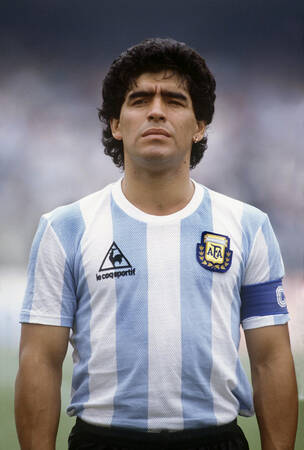
Diego Armando Maradona
Date of Birth
October 30, 1960
Place of Birth
Lanús, Buenos Aires Province, Argentina
Date of Death
November 25, 2020
Age at Death
60 years
Nationality
Argentine
Profession
Professional Footballer, Football Manager
Playing Position
Attacking Midfielder / Second Striker
Early Life and Childhood
Diego Armando Maradona was born into a poor working-class family in Villa Fiorito, one of the toughest neighborhoods near Buenos Aires. He was the fifth of eight children. From a very young age, Maradona showed extraordinary talent with a football. By the age of three, he was already inseparable from the ball.
At just 8 years old, Maradona was discovered by a youth scout and joined Los Cebollitas, the junior team of Argentinos Juniors. His performances quickly made him a local sensation, and it was clear that he was destined for greatness.
Club Career
Argentinos Juniors (1976–1981)
Maradona made his professional debut at the age of 15. He scored 116 goals in 166 matches, becoming one of the league’s most exciting young stars. His dribbling, vision, and balance were far beyond his age.
Boca Juniors (1981–1982)
In 1981, Maradona joined Boca Juniors, one of Argentina’s biggest clubs. He won the Argentine Primera División in his first season, instantly becoming a fan favorite.
FC Barcelona (1982–1984)
After the 1982 FIFA World Cup, Maradona transferred to FC Barcelona for a world-record fee at the time. His time in Spain was affected by injuries and illness, including hepatitis.
Despite challenges, he won:
- Copa del Rey
- Spanish Super Cup
- League Cup
A violent on-field incident during the Copa del Rey final marked the end of his Barcelona career.
Napoli – The Golden Era (1984–1991)
Maradona’s move to SSC Napoli changed football history. Napoli, previously a struggling club, reached unimaginable heights under his leadership.
Major Achievements with Napoli:
- 2× Serie A titles (1986–87, 1989–90)
- Coppa Italia (1987)
- UEFA Cup (1989)
- Italian Super Cup (1990)
Maradona became a god-like figure in Naples. His number 10 jersey was later retired by the club.
Later Club Career
- Sevilla (1992–1993)
- Newell’s Old Boys (1993–1994)
- Boca Juniors (1995–1997)
He officially retired from football in 1997.
International Career – Argentina
Argentina National Team (1977–1994)
Maradona earned 91 caps and scored 34 goals for Argentina.
1986 FIFA World Cup – A Legendary Performance
The 1986 World Cup in Mexico defined Maradona’s legacy. He captained Argentina to glory and delivered one of the greatest individual tournaments in football history.
Iconic Moments:
- “Hand of God” goal vs England
- “Goal of the Century” (solo dribble past five players)
Argentina won the final against West Germany, and Maradona lifted the World Cup as captain.
Other International Highlights
- 1982 World Cup: Early exit
- 1990 World Cup: Runner-up (lost final to West Germany)
- 1994 World Cup: Sent home after failing a drug test
Playing Style and Skills
Maradona is widely regarded as one of the most technically gifted footballers of all time.
Key Strengths:
- Exceptional dribbling and ball control
- Perfect balance and low center of gravity
- Creative playmaking
- Vision and passing
- Leadership under pressure
He could change a match single-handedly.
Individual Awards and Honors
- FIFA World Cup Golden Ball (1986)
- Argentine Footballer of the Year (multiple times)
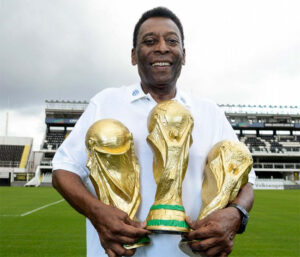
- FIFA Player of the Century (shared with Pelé)
- Included in FIFA 100 greatest players list
- Serie A top assister and icon
Managerial Career
After retirement, Maradona worked as a coach and manager.
Notable Roles:
- Argentina National Team Head Coach (2008–2010)
- Managed clubs in Argentina, Mexico, UAE, and Spain
He led Argentina to the 2010 FIFA World Cup, reaching the quarter-finals.
Personal Life
Maradona’s personal life was often turbulent. He battled:
- Drug addiction
- Alcohol abuse
- Health issues, including heart problems
He had several children and maintained strong ties to his roots in Argentina despite global fame.
Health Issues and Death
In his later years, Maradona suffered from obesity, diabetes, and heart complications. He underwent brain surgery in early November 2020.
On November 25, 2020, Diego Maradona passed away due to cardiac arrest at his home in Argentina.
Legacy
Diego Maradona is remembered as:
- One of the greatest footballers of all time
- A symbol of passion, rebellion, and genius
- A hero to millions, especially in Argentina and Naples
Stadiums, murals, documentaries, and statues around the world honor his legacy. His impact on football goes far beyond trophies and statistics.
Conclusion
Diego Maradona was not just a footballer—he was a phenomenon. His brilliance, flaws, passion, and magic made him unforgettable. For many fans, he remains the purest expression of football genius the world has ever seen.
\ Get the latest news /